News

UN Human Rights Office

25 August, 2025

Justice, land and freedom in Paraguay

At dawn on 15 June 2012, the peasant community of Curuguaty, in the department of Canindeyú, Paraguay, was in a state of tension due to a land conflict. A police operation resulted in a tragedy that w...

At dawn on 15 June 2012, the peasant community of Curuguaty, in the department of Canindeyú, Paraguay, was in a state of tension due to a land conflict. A police operation resulted in a tragedy that would mark the history of this South American country.

The “Marina Kue” case, or Curuguaty massacre, refers to a clash in which 17 people were killed: 11 peasants and 6 police officers. The police entered the territory with a search warrant, but attempted to carry out a forced eviction instead, which led to confrontation.

Hugo Valiente, a lawyer, human rights defender and a member of organisations that worked on the Curuguaty massacre case, said that within a week, the case escalated into the political domain.

This eventually led to the impeachment of President Fernando Lugo, against whom it was instrumentalised.

Darío Acosta, a peasant from the area and human rights defender, witnessed the massacre.

“On the day of the massacre I was there with my family and with all the relatives of those killed and imprisoned in Curuguaty. And since then, I have been part of a commission to confront this deplorable event,” he said.

Among the people who died were two brothers of Martina Paredes, for whom the massacre not only took lives but also shaped the course of her own existence. For Paredes, this injustice drives her and compels her to continue the struggle for justice.

A group of peasants from Curuguaty, Paraguay, standing near a cross to mark the massacre that occurred in this location on 15 June 2012. © Darío Acosta

From the beginning, justice leaned to only one side.

“No policemen were investigated. The deaths of the peasants were not investigated, it was assumed they had died in the legitimate use of force,” Valiente said.

“Hours after the massacre there was already a narrative of an ambush, and the Public Prosecutor’s Office adjusted the evidence, even in violation of due process, to sustain that narrative,” he added.

Paredes said that many fellows were imprisoned because of the struggle for land.

Hugo Valiente (right), a Paraguayan human rights defender, during the official visit of the former Rapporteur on toxics and human rights, Marcos Orellana, to Paraguay. © Hugo Valiente

Years later, social and legal pressure opened a crack of justice for the peasants criminalised for the massacre.

“The trial was finally annulled by the Supreme Court of Justice, the peasants were acquitted, and they were released,” Valiente said.

The news brought hope back to the families.

“We secured the freedom of the men and women imprisoned in the Curuguaty case. Without guilt nor regret. That is the most important thing, to have the freedom to be with the family,” Paredes said.

But this was not the end of the story. The acquittal had consequences.

“The judges who acquitted the peasants were subjected to impeachment. One of the judges was forced to resign and another one received a sanction,” Valiente said.

The struggle for land and against impunity

“The land told a story, which is an X-ray of Paraguay’s history and of injustices built around inequality in the distribution of wealth,” Valiente said.

The Curuguaty massacre took place in the context of a historic land conflict in Paraguay, one of the countries with the greatest inequality in its distribution. “Marina Kue”, now renamed “San Oscar Romero”, was an estate whose lands were originally State-owned and destined for agrarian reform.

“The Curuguaty case is symbolic of many other land conflicts in Paraguay, where poor peasant and indigenous communities face the joint powers of agricultural business and the State,” said Jan Jarab, UN Human Rights Representative for South America.

Jarab added that these conflicts often end in forced evictions of entire communities — a trend that has been growing in the last years.

“Paraguay is a country of concentrated landownership, it is one of the countries with the most unequal land distribution in the world,” Valiente said. “The [Stroessner] dictatorship appropriated and illegally distributed among its economic allies some 11 million hectares of land, an area similar in size to Panama.”

With agrarian reform unfulfilled, many peasants, finding themselves dispossessed, occupied land to survive.

Acosta said that they defend the land because for peasants and small farmers the land is fundamental.

For us the land means bread, it means life, because from it we take everything for our daily living.

Darío Acosta, Paraguayan peasant and human rights defender

Paredes agreed.

“Having land means that we have food, that we have shelter and that we have a community. That represents our dignity, our identity and the daily sustenance of the family,” she said.

The peasant struggle did not end in the courts. The land, the root of the massacre, remained at the centre of the dispute, but a decade later, there have been results.

“Eighty per cent of the land has already been legalised in favour of the occupants, more than 160 people have already been granted it and are paying their first instalment for the title,” Acosta said.

Darío Acosta (left) and Martina Paredes (right), with another member of the Curuguaty community, show the receipt for the first land payment towards their land titles. © Darío Acosta

For Jarab, an important milestone was the enactment in 2023 of the law that officially transfers “Marina Kue” to the peasants.

The progress in obtaining land contrasts with the lack of justice.

“It is still missing that they investigate who killed the peasants. We do not know how our relatives died,” Paredes said.

According to Valiente, the hope of the victims’ families is that the case will move forward in the Inter-American human rights system.

The international perspective

UN Human Rights played an important role by establishing direct contact with the community, increasing its visibility, and building bridges with key State institutions such as the Ministry of Public Defence.

Jarab said that this contributed to the fact that the criminal cases against a number of peasants were finally dropped, and the underlying land problem largely resolved. 

Through the UN we can also make our case known worldwide. The visit of the UN Human Rights Representative to our community was very important.

Darío Acosta, Paraguayan peasant and human rights defender

For Valiente, the statements made by UN Human Rights on the case and the existence of international human rights bodies make it possible to break through the barriers and overcome adversity caused by the lack of justice at the local level.

“Only united can we achieve our rights,” Acosta said.

22 August, 2025

Continuing killings of civilians in El Fasher and Abu Shouk camp

Brutal attacks by the Rapid Support Forces (RSF) on the besieged city of El Fasher and the adjoining Abu Shouk camp for displaced persons in North Darfur, Sudan, resulted in the killing of at least 89...

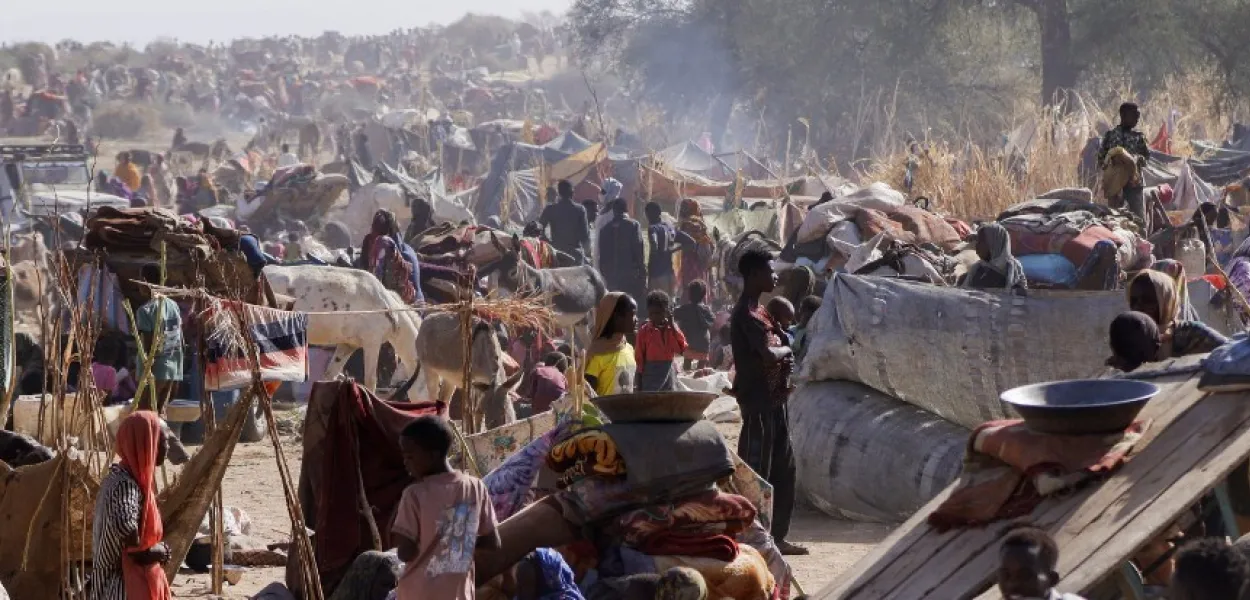
Brutal attacks by the Rapid Support Forces (RSF) on the besieged city of El Fasher and the adjoining Abu Shouk camp for displaced persons in North Darfur, Sudan, resulted in the killing of at least 89 civilians over a 10-day period up to 20 August.

We fear the actual number of civilians killed is likely higher.

In the latest attacks documented by our Office, between 16 and 20 August, at least 32 civilians were killed. At least 57 civilians were killed in previous attacks on 11 August.

Such attacks are unacceptable and must cease immediately.

We are particularly horrified that among the most recent spate of civilian killings, 16 appear to have been cases of summary executions. Most of the victims were killed in Abu Shouk camp and belonged to the African Zaghawa tribe, according to information gathered by our Office. In another case in the El Fasher area, a victim was asked which tribe he belonged to. He was killed after responding that he was from the African Berti tribe.

This pattern of attacks on civilians and wilful killings, which are serious violations of international humanitarian law, deepens our concerns about ethnically motivated violence.

We have also received disturbing reports from the ground that during attacks on 16 August at least 40 internally displaced men were abducted. Their whereabouts remain unknown.

The humanitarian situation in El Fasher has reached a critical point after more than a year of siege. There is a growing risk of famine in both the city and other areas of North Darfur.

In this context, we are appalled by accounts that those trying to deliver much-needed aid have once again come under attack. On 20 August, a UN humanitarian convoy, consisting of 16 trucks carrying essential food supplies, was hit by aerial strikes in Mellit, North Darfur. This incident follows a previous attack on a UN humanitarian convoy in Al Koma, North Darfur, on 2 June.

Humanitarian assistance and workers are protected explicitly under international humanitarian law and must not be targeted. Attacks on humanitarian efforts only worsens the human rights situation for civilians.

UN High Commissioner for Human Rights Volker Türk calls on all parties to the conflict to take concrete measures immediately to ensure the protection of civilians, including safe passage for those wishing to leave conflict-affected areas, and to facilitate unimpeded humanitarian assistance for those in need.

22 August, 2025

Activists: Treaty not just about plastics, but about rights, health and justice

For nearly two weeks, a six-metre-tall sculpture has dominated the plaza in front of Palais des Nations in Geneva, Switzerland. The installation depicted a version of Auguste Rodin’s The Thinker sculp...

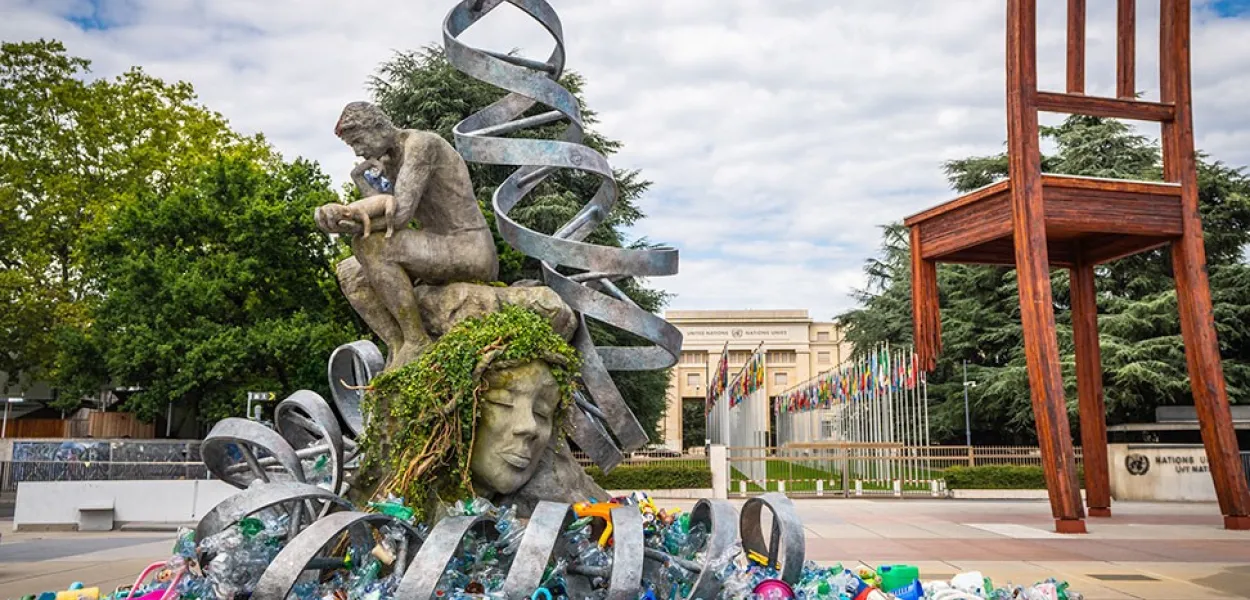
For nearly two weeks, a six-metre-tall sculpture has dominated the plaza in front of Palais des Nations in Geneva, Switzerland. The installation depicted a version of Auguste Rodin’s The Thinker sculpture, holding plastic bottles and an infant. The Thinker rests on a depiction of Mother Earth. Next to this, rises the double helix strand of DNA. All of this is surrounded by a sea of plastic — bottles, bags, fishing nets and containers.

And all of it is a message, said Benjamin Von Wong, the artist who created the installation.

“The whole plastics problem is kind of growing every day,” Von Wong said, as he adjusted another bottle, adding to the installation. “We are adding more pieces of plastic to this sculpture to really highlight the rising cost of inaction. To show these treaty negotiations the price of inaction. The time is now for us to make a difference. The time is now for us to do something about it.”

The Thinker’s Burden was installed during the second part of the fifth session of the Intergovernmental Negotiating Committee (INC) to develop an “international legally binding instrument on plastic pollution, including the marine environment.” The negotiations took place for nearly two weeks in Geneva in early August, with an aim to developing a treaty dealing with the full lifecycle of plastic pollution globally, said Benjamin Schacter, Senior Human Rights Officer at UN Human Rights.

“UN Human Rights has been actively engaged with the negotiations since the beginning, organizing events, providing technical advice and support, convening partners and making submissions and statements,” he said. “The hoped for outcome is an ambitious treaty that addresses the full lifecycle of plastics and that will ensure a human rights-based approach to rapidly and equitably end plastic pollution.”

However, the hoped for treaty did not occur. Negotiators failed to reach an agreement on a plastics treaty, paving the way for another round of negotiations. UN Human Rights Chief Volker Türk called the failure “terrible news.”

“We stand with all who are paying the price for the greed of plastics producers,” he wrote on his X account. “People have a right not to be contaminated and not to have their waterways choked by plastic.”

People behind the fight against plastic pollution

“Our planetary systems cannot tolerate the volumes, masses and complexity of plastics, materials, products, chemicals that we’re making today,” said Bethanie Carney Almroth, professor of ecotoxicology at the University of Gothenburg in Sweden. “We know that (plastics) quite literally are destabilizing the Earth system, affecting climate, affecting biodiversity, affecting nutrient cycling. And the more we learn, the more the evidence is growing stronger.”

Carney Almroth coordinates a coalition of more than 400 scientists from across 65 countries who provide evidence-based information on plastics pollution, which is made available during the negotiations. Access to such information is crucial for the negotiations.

“The work we’ve done bringing science here, along with other scientists who are active in this space, has really been instrumental in help us not just understand the impacts of plastic pollution, but also indicate where we need solutions. We might be able to find something that is truly effective if we follow the evidence,” she said.

Image removed.

Bethanie Carney Almroth is a professor of ecotoxicology at the University of Gothenburg in Sweden. She also co-coordinates a coalition of more than 400 scientists from across 65 countries who provide evidence-based information on plastic pollution. © Bethanie Carney Almroth

Access to information needs to be two-way, with negotiators being made aware of how plastic pollution affects communities at a grassroots level, said Griffins Ochieng, from the Centre for Environment Justice and Development (CEJAD). The Kenya-based CSO promotes sound management of chemicals and waste to protect human health and environment. Hazardous chemicals in plastics leach into the environment, infringing on human rights, he said.

“We have to recognize that people are at the centre of the negative impact of plastic pollution,” Ochieng said. “These are populations or people, such as waste pickers, that are directly or indirectly exposed…and whose livelihood and health are (directly) tied to plastics. The right to a clean and healthy environment, the right to participation, the right to health…all these rights need to be integrated into all discussions and negotiations of a treaty.”

For Terese Teoh, a member of the Singapore Youth for Climate Action (SYCA), limiting plastic pollution comes from a place of personal experience. While attending school, she remembered learning about the harms that plastic pollution causes the environment and the big push for recycling. Yet, when she stepped outside the classroom, plastic products were everywhere — inside the school canteen, in shops, in packaging.

“There was just this nonchalance towards plastics,” she said. “This contradiction did not sit well with me. I could not understand why we are telling our children one thing but practicing another.”

As part of the SYCA, Teoh works on plastic pollution from a rights-based approach — seeing the impact of production plants, recycling and incinerator protocols, and microplastics impact human lives and rights.

“I think a lot of young people in Singapore join the plastics movement because they see it as so rampant in their society and they just want to do something about it,” she said. “So, the first thing I tell my volunteers is that plastic is not just about reducing and recycling. It is an environmental justice issue.”

Anti-plastic pollution people

“The community that I come from, we don’t actually know what plastic is because plastic is not part of our culture,” said Indu Tharu, a writer, activist and member of Tharu people of Nepal.

Tharu said her community does not produce plastics and are not familiar with how to handle them. Everything for daily use was made from natural resources, such as plants, fibres and clay. But as plastic has become more pervasive, Tharu said she has noticed new health issues arising among the Tharu community, including an increase in illnesses such as cancer in younger people.

“We had never heard of cancer in our community, but now, it’s become very common,” she said.

For Indigenous communities like hers, the fight against plastic pollution is fight for cultural rights.

The challenges posed by plastic pollution cut across issue lines and groups, said Marie Therese Merhej Seif from the Women’s Major Group. The group is a civil society platform within the UN Environment Programme (UNEP), that represents women’s organisations in UNEA processes. It advocates for gender equality and the inclusion of women’s perspectives in environmental decision making.

In Western Asia, the region that Seif covers, plastic pollution is more than an environmental issue, it is a direct threat to the lives of millions who have been displaced by conflict. She cited the example of the millions of Syrian refugees living in Lebanon in camps whose assistance materials come in plastic containers; plastic that eventually has to be eliminated. This is normally done via burning, and when plastic is burned, the chemicals released are harmful to health, she added.

“The treaty will be judged not just by how much plastic it ends, but how it protects the most vulnerable including women, kids, and youth who have lost homes, access to clean water, or health systems,” she said.“And there is no global health without addressing plastic toxicity on the life of women who carry the burden of both pollution and peace building.”

Back in the plaza, Von Wong directed a group of protestors to a space within the installation for photos and chants. He said he liked that the artwork found resonance among the public and protestors. He hoped it would prick the conscience of treaty negotiators, keeping what they are working on front of mind.

“I think that having these visual anchors, these monuments and these moments in time are just one way of calling for accountability in a way that is super accessible,” he said. “And I think what’s fun about art like this is that everyone can interact with it however they want.”

21 August, 2025

Türk denounces intensification of US reprisals against International Criminal Court personnel

GENEVA – UN High Commissioner for Human Rights Volker Türk on Thursday said the imposition by the United States of America of further sanctions on judges and deputy prosecutors of the International Cr...

GENEVA – UN High Commissioner for Human Rights Volker Türk on Thursday said the imposition by the United States of America of further sanctions on judges and deputy prosecutors of the International Criminal Court should prompt the international community to take measures to protect them.

“The relentless intensification of US reprisals against international institutions and their personnel must stop,” Türk said.

As Türk has stressed, “sanctioning judges and prosecutors at national, regional or international levels, for fulfilling their mandate in accordance with international law standards, is an assault on the rule of law and corrodes justice.”

The High Commissioner called for a withdrawal of the sanctions against the two judges and two deputy prosecutors named on Wednesday, the four other judges and one prosecutor previously named, as well as Special Rapporteur appointed by the UN Human Rights Council on the situation in the Occupied Palestinian Territory.

“In the meantime, I call on States to take immediate steps to protect all of them, including by taking measures to encourage corporations operating within their jurisdiction not to implement the sanctions against these individuals,” he said.

“States need to step up to defend the institutions they have created to uphold and defend human rights and the rule of law. Those working to document, investigate and prosecute serious violations of international law should not have to work in fear.”

14 August, 2025

Peru: Türk dismayed by amnesty law that grants impunity to perpetrators of gross human rights violations

GENEVA – An amnesty law enacted in Peru violates international standards and is a backward step in the search for justice for the gross human rights violations committed during the country’s internal ...

GENEVA – An amnesty law enacted in Peru violates international standards and is a backward step in the search for justice for the gross human rights violations committed during the country’s internal armed conflict, UN High Commissioner for Human Rights Volker Türk said on Thursday.

The Peruvian President on 13 August signed into law legislation that grants amnesty to members of the security and armed forces and self-defence committees for crimes committed during the internal armed conflict that took place between 1980 and 2000. Hundreds of cases, both concluded and ongoing, will be affected by the new law.

“I am dismayed by the promulgation of this amnesty law. This is an affront to the thousands of victims who deserve truth, justice, reparations, and guarantees of non-recurrence, not impunity,” said the High Commissioner.

“International law, to which Peru is bound, clearly prohibits amnesties and statutes of limitations for gross violations of human rights and serious violations of international humanitarian law,” he added.

“This backward step in the pursuit of justice and reconciliation in Peru must be immediately reversed,” Türk stressed.

8 August, 2025

Türk: Israel’s plan for complete military takeover of Gaza must be immediately halted

The Israeli Government’s plan for a complete military takeover of the occupied Gaza strip must be immediately halted. It runs contrary to the ruling of the International Court of Justice that Israel m...

The Israeli Government’s plan for a complete military takeover of the occupied Gaza strip must be immediately halted. It runs contrary to the ruling of the International Court of Justice that Israel must bring its occupation to an end as soon as possible, to the realisation of the agreed two-State solution and to the right of Palestinians to self-determination.

On all evidence to date, this further escalation will result in more massive forced displacement, more killing, more unbearable suffering, senseless destruction and atrocity crimes.

The war in Gaza must end now. And Israelis and Palestinians must be allowed to live side by side in peace.

Instead of intensifying this war, the Israeli Government should put all its efforts into saving the lives of Gaza’s civilians by allowing the full, unfettered flow of humanitarian aid. The hostages must be immediately and unconditionally released by Palestinian armed groups. Palestinians arbitrarily detained by Israel must also be immediately and unconditionally released.

23 October, 2025

Türk says ICJ ruling is crystal clear on Israel's obligations in Gaza

The range of Israel’s obligations under international law, spelled out by the International Court of Justice ruling yesterday, are crystal clear. These start with the people of Gaza and throughout the...

The range of Israel’s obligations under international law, spelled out by the International Court of Justice ruling yesterday, are crystal clear. These start with the people of Gaza and throughout the occupied Palestinian territory having the right to the essential supplies they need to live, and must be ensured by Israel as the occupying power.

The Advisory Opinion also confirmed afresh that international human rights law applies alongside international humanitarian law in the OPT, and that Israel is bound to respect, protect and fulfil the human rights of Palestinians. The Court specifically singled out the rights to life, to be free from torture or ill-treatment, to liberty and security, to freedom of movement, to protection of the family, to an adequate standard of living, to health, education and to be free from discrimination, alongside the right to self-determination.

Israel – and all other States - must comply with the law as made clear in the Court’s ruling, and act swiftly to bring about meaningful improvements to the appalling human rights and humanitarian situation on the ground. Other parties to the conflict must also comply with their obligations under international law. That starts with saving lives rather than placing them at grave risk, and flooding Gaza with much-needed aid.

This must be the first step towards recovery and peacebuilding anchored in human rights, so that the ceasefire in Gaza transforms into enduring peace, in line with international law.

27 August, 2025

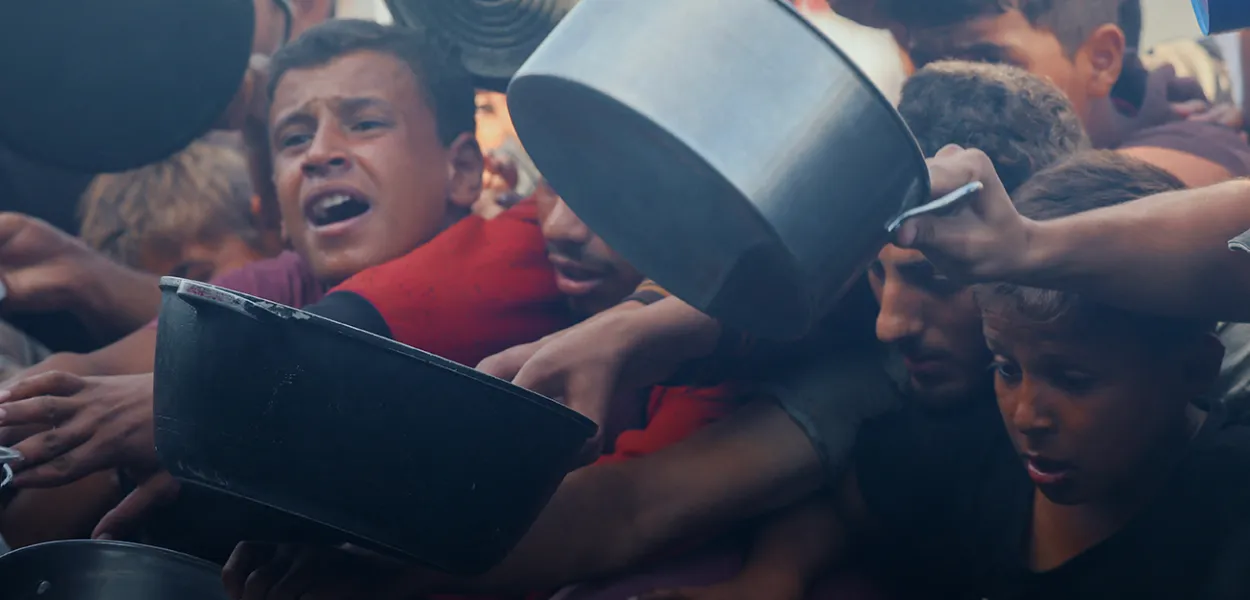
Türk says Gaza Governorate famine is direct result of Israeli Government actions

The famine declared today in Gaza Governorate by the Integrated Food Security Phase Classification (IPC) is the direct result of actions taken by the Israeli Government. It has unlawfully restricted t...

The famine declared today in Gaza Governorate by the Integrated Food Security Phase Classification (IPC) is the direct result of actions taken by the Israeli Government. It has unlawfully restricted the entry and distribution of humanitarian assistance and other goods necessary for the survival of the civilian population in the Gaza strip.

We have already seen deaths from starvation and malnutrition across the strip.  The Israeli military has destroyed critical civilian infrastructure and almost all agricultural land, banned fishing, and forcibly displaced the population – all drivers of this famine.

It is a war crime to use starvation as a method of warfare, and the resulting deaths may also amount to the war crime of willful killing. Israeli authorities must take immediate steps to end the famine in the Gaza Governorate and prevent further loss of life across the Gaza strip. They must ensure immediate entry of humanitarian assistance in sufficient amounts, and full access to UN and other humanitarian organisations.

26 August, 2025

Türk calls on Egypt to end “rotation” practice that facilitates prolonged arbitrary detentions

GENEVA – UN Human Rights Chief Volker Türk on Tuesday called on Egyptian authorities to put an end to a practice that allows Government critics to be held arbitrarily and for prolonged periods, even a...

GENEVA – UN Human Rights Chief Volker Türk on Tuesday called on Egyptian authorities to put an end to a practice that allows Government critics to be held arbitrarily and for prolonged periods, even after serving their sentences or completing maximum pretrial detention.

Human rights defenders, activists, lawyers, journalists, peaceful protesters and political opponents have been targeted by this strategy, which has come to be known as “rotation”. The practice entails the authorities bringing new charges against individuals when they are about to complete their prison sentences or as they reach the maximum legal period of pretrial detention, thus preventing their release. These fresh charges, often under counter-terrorism laws, are usually similar to those for which they had already been charged or convicted, and often lack substantive foundation.

The latest case concerns poet Galal El-Behairy, who was arbitrarily detained after completing a prison term on 31 July 2021 for writing songs and poetry critical of the Government. Since then, he has faced similar charges in two different cases under the counter-terrorism law and the penal code. The latest charges were brought against him on 19 August 2025, when El-Behairy was questioned by the Supreme State Security Prosecution, extending his detention for at least 15 more days.

“The Egyptian Government must immediately stop this practice of ‘rotation’ and release all those who have been subjected to it,” Türk said. “It appears to be used to circumvent the rights of individuals to liberty, due process and equality before the law.

“Most of those targeted by ‘rotation’ should not have been detained or jailed in the first place – the charges brought against them are often related to the exercise of their legitimate rights to freedom of expression and peaceful assembly,” the High Commissioner added. “This practice has become a tool by which the Egyptian Government represses those perceived to be critical of, or in opposition to, its policies.”

The UN Human Rights Office is closely following a number of cases of “rotation”. Indications are that the practice is widely used in cases of politically motivated charges. The lack of transparency in such cases, however, makes it difficult to assess the full scale of the problem.

In addition to El-Behairy’s case, this practice has been used in the case of writer and activist Alaa Abdel Fattah; lawyer and former member of the National Council for Human Rights, Hoda Abdel-Monei; lawyer and coordinator of the Association of the Families of the Forcibly Disappeared, Ebrahim Metwally Hegazy; and political activist and former spokesperson for the 6th of April Youth Movement, Mohammad Adel Fahmy Ali. All of them remain in arbitrary detention.

“All those arbitrarily detained for exercising their fundamental freedoms or defending human rights must be released immediately,” Türk said. “It is crucial that Egyptian authorities ensure that legal processes and, in particular, the application of counter-terrorism or other criminal laws, are never used to punish people for exercising their basic human rights.”

Tags

22 August, 2025

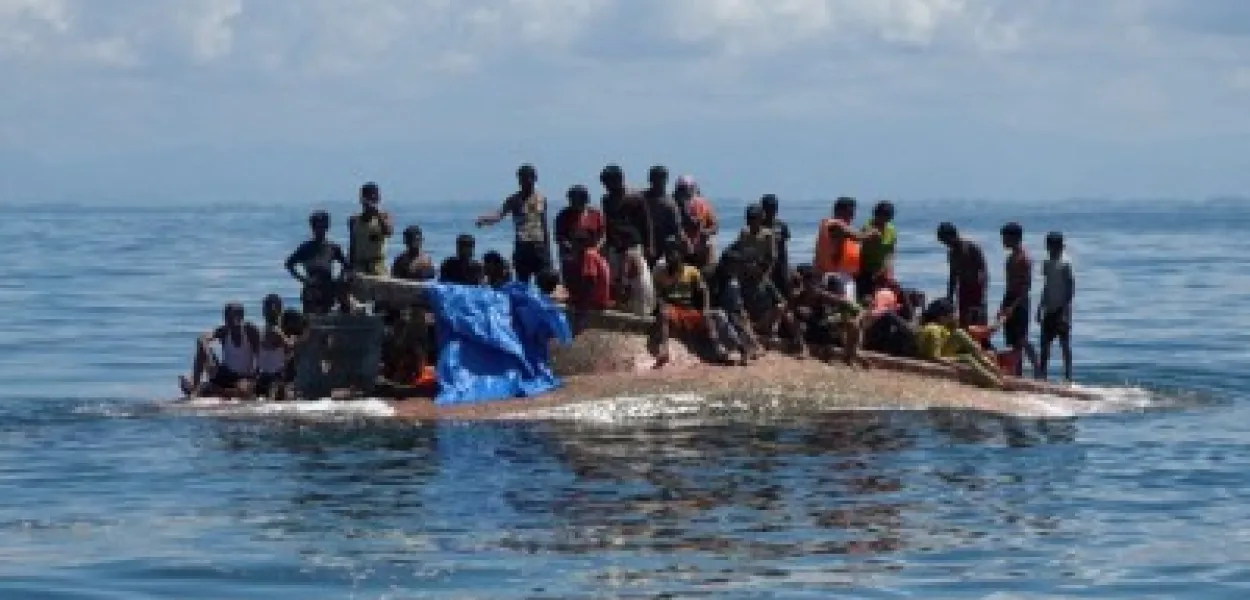
Myanmar: Eight years after brutal military assault, Rohingya suffering continues

As we near the passing of another year with no justice for the violence which started on 25 August 2017 in Myanmar, we are left to ask the question of when the enduring misery for these and ongoing cr...

As we near the passing of another year with no justice for the violence which started on 25 August 2017 in Myanmar, we are left to ask the question of when the enduring misery for these and ongoing crimes will end, particularly for the long-suffering Rohingya community.

Ending impunity and ensuring the Rohingya’s rights to security, citizenship and equality are essential for breaking the cycle of violence.

Since November 2023, the human rights and humanitarian situation in Rakhine have sharply deteriorated, further deepening the already life-threatening conditions faced by the Rohingya.

Both the military and the Arakan Army have committed and continue to commit serious atrocity crimes against the Rohingya with impunity — in flagrant violation of international law, including the provisional measures ordered by the International Court of Justice.

Amidst a global funding crisis, Rohingya in both Myanmar and Bangladesh are enduring dire conditions compounded by drastic cuts to food assistance.

UN Human Rights Chief Volker Türk implores the international community to step up support for the Rohingya by increasing humanitarian funding to secure access to basic needs and essential services, and to resolutely support international accountability processes.